




By Jon Esquivel, excerpted from the September Issue of the NCI High-Performance HVAC Today magazine

Why Building Science and High-Performance HVAC™ Should Be Part of Every Serious Service Offering
Most service calls begin with a symptom: a hot bedroom, a muggy house, a noisy system, a high utility bill, or a homeowner who says they need an ERV (Energy Recovery Ventilator) because they read about it online. It is tempting, especially for experienced HVAC professionals, to hear the symptoms and immediately start problem solving. We have seen the same complaint hundreds of times. We know the equipment. We know the shortcuts. We know the likely suspects.
But High-Performance HVAC™ requires a different posture. It asks us to slow down, listen carefully, test what the house and system are actually doing, and then explain the findings in a way the homeowner can understand. That is where building science belongs as part of your service offerings. Not as an add-on. Not as a sales gimmick. As the discipline that helps us connect the equipment to the building and the building to the people living inside it.
Being a “Home Performance Whisperer”
To me, being a home performance whisperer means learning to hear what the homeowner is saying AND what the house is telling you. The homeowner may describe their issues with comfort, health, humidity, dust, odors, noise, or fear. The house speaks through pressures, temperatures, airflow, leakage, duct performance, load, and equipment operation. Our job is to bring those voices together.
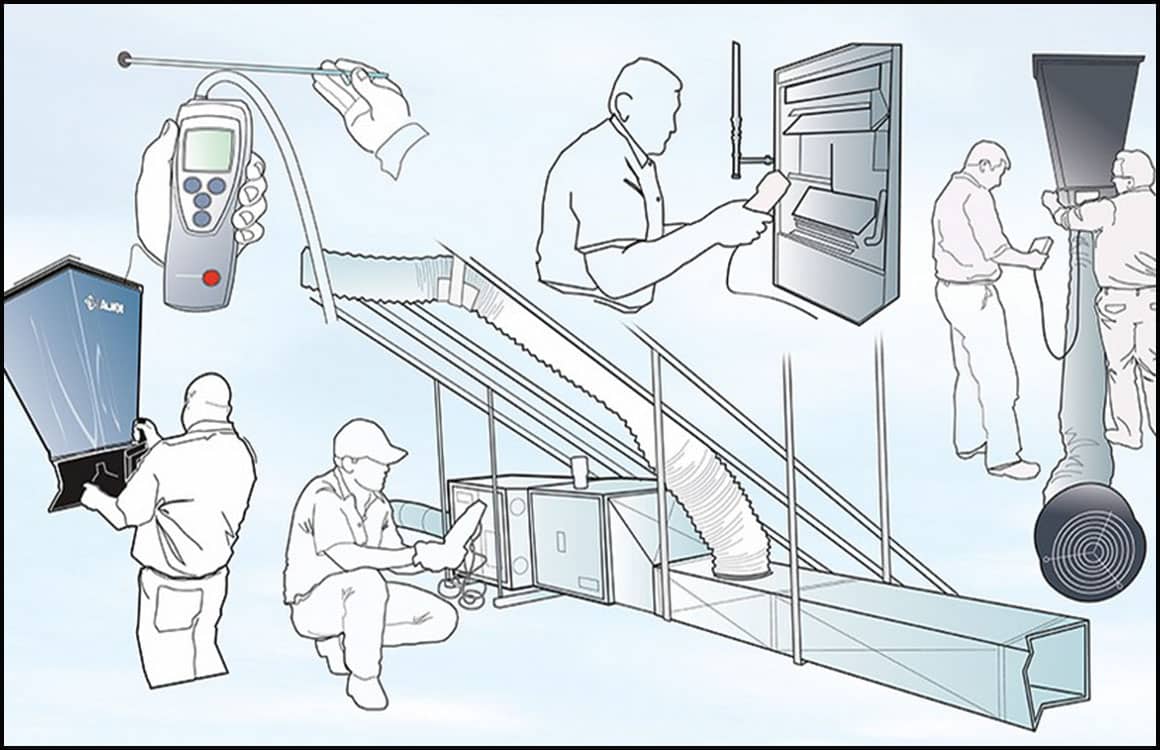
That does not happen by guessing. It happens by testing. You can only understand how the system and the structure blend together when you measure. Static pressure, delivered airflow, room-to-room pressure, temperature split, humidity, duct leakage, envelope leakage, and load calculations all help move the conversation from opinion to evidence.
The Cost of Assumptions
One of the biggest mistakes we make as contractors is assuming we already know the answer. We assume the hot bedroom needs a larger duct. We assume the humidity problem is an oversized air conditioner. We assume the homeowner cannot afford a better solution. We assume equipment is the problem because equipment is what we know best.
Building science pushes us outside that mindset. A comfort complaint may be driven by duct design, attic conditions, leakage, insulation, pressure imbalance, ventilation, occupant behavior, or a system that was never matched to the home after upgrades were made. A homeowner may have spent thousands on insulation, air sealing, or a new variable-speed system and still be worse off because nobody looked at the home as a system.
That is why data matters. Without data, even an experienced technician is still operating on a hunch. Sometimes hunches are right, but a high-performance contractor cannot build trust or prove results on luck. We need measurements before doing the work and measurements after the work. That is how we diagnose, prescribe, and verify.
Start With a Conversation
Before I put my head in an attic or start pulling tools off the truck, I want to know why I am there. That does not mean every maintenance call needs a 45-minute interview. If the call is an emergency, you may need to stop the bleeding first.
But when the call involves comfort, indoor air quality, repeated failures, humidity, or a homeowner who has already tried several fixes, the conversation becomes part of the diagnostic process.
Good questions disarm people. They also reveal what the homeowner has already tried, who has worked on the house, how long the problem has existed, what they think is wrong, and what they are afraid of.
Many homeowners are embarrassed. They may not want to admit they ignored maintenance, chose the cheapest option, bought equipment that did not solve the problem, or followed advice from the internet. They need permission to tell the truth without feeling judged.
Questions like “What makes you think you need that?” or “What have you done so far to fix this?” are not meant to trap anyone. They are meant to uncover the real pain.
If someone says they need an ERV, I want to know why. Is the house stale? Is it humid? Are there odors? Did someone seal the home and forget ventilation? Did a search engine give them a product before anyone found the problem? The product they ask for may not provide the outcome they need.
From Interrogator to Interviewer
Early in my career, I wanted to be the smartest guy in the room. I wanted the patches, the certifications, and the technical answers to prove I knew what I was doing. Over time, I learned that homeowners do not need to be overwhelmed. They need to be understood.
There is a difference between interrogating and interviewing. Interrogating makes people defensive. Interviewing helps them relax. A simple response such as “That makes sense,” or “I can see why you tried that,” or “I probably would have started there too,” lets the homeowner know you are not there to shame them. You are there to understand the path that led to the current condition.
Once they feel safe, they usually share more. They tell you about the contractor who never came back, the maintenance that was skipped, the room that has been uncomfortable for 10 years, the insulation job that changed everything, or the new system that was supposed to “do it all” but made the house worse. That information is valuable. It tells you where to test and what to verify.
Building Science Makes Service More Valuable
Adding building science to your service repertoire does not mean every technician becomes a full-time home performance consultant. It means your company learns when a call requires just a repair or when it is a symptom of a larger system problem. A fast-paced service model may send one technician to restore cooling and another specialist to perform deeper testing. A company focused on indoor air quality or building performance may build longer diagnostic appointments into its process.
Either way, the opportunity is real. Homeowners with persistent comfort, health, humidity, and energy problems are often in pain. They have spent money. They are frustrated. They may be worried about what another test will reveal or what the solution will cost. A contractor who can listen, measure, explain, and verify becomes more than a box changer. That contractor becomes a trusted problem-solver.
High-Performance HVAC also creates better conversations around value. If you can show that the duct system is restricting airflow, the building envelope has changed the load, or pressure imbalances are pulling attic air into the living space, you are no longer selling a part. You are explaining a condition. You are giving the homeowner a path from symptom to solution.
Communicate the Findings
Testing is only half the job. The other half is communication. Homeowners do not need every technical detail at once. They need a clear explanation of what you found, why it matters, what options exist, and how you will prove the result. Keep the language simple. Use pictures, readings, and comparisons. Show them the house is not “bad” and they are not “wrong.” The home is simply giving us information.
When we approach service this way, we stop treating the HVAC system as an isolated box. We start treating the home as a system that is made up of equipment, ducts, the building structure, ventilation, moisture, pressure, and people. That is the heart of building science, and it is the future of serious HVAC service.
The Repertoire Contractors Need Now
The HVAC industry is changing. Homes are tighter. Equipment is more advanced. Homeowners are more informed, and sometimes more misinformed. Comfort and indoor air quality concerns are more visible than ever. Contractors who rely only on replacement equipment and quick assumptions will continue to miss the deeper problems.
Building science and High-Performance HVAC give us a better way. Slow down. Listen. Ask better questions. Test before you prescribe. Communicate clearly. Verify the work. When you do that, the house will tell you what it needs, and the homeowner will trust you to help make it right.
That is what a High-Performance Home Whisperer does.
ABOUT JON ESQUIVEL
Jon Esquivel of Austin Star Comfort Services, is a High-Performance HVAC and home performance professional specializing in helping contractors and homeowners understand how HVAC systems, ductwork, building envelopes, ventilation, moisture, and occupant comfort work together. Through field testing, practical diagnostics, and clear homeowner communication, he turns complaints into measurable solutions. This article is based on Jon’s presentation at the 2026 NCI High-Performance HVAC Summit. To reach him, click: ncilink.com/ContactMe.